Skip to content
pablo mendoza

Things I’ve built

Projects

ShellHacks 2026 / Robotics

Autonomous
Multi-Robot Fleet

Physical robots, overhead vision, and centralized planning. My work connected firmware, hardware, communication, autonomous navigation, and agent orchestration into a working system.
  • ESP32
  • Computer vision
  • Agent orchestration
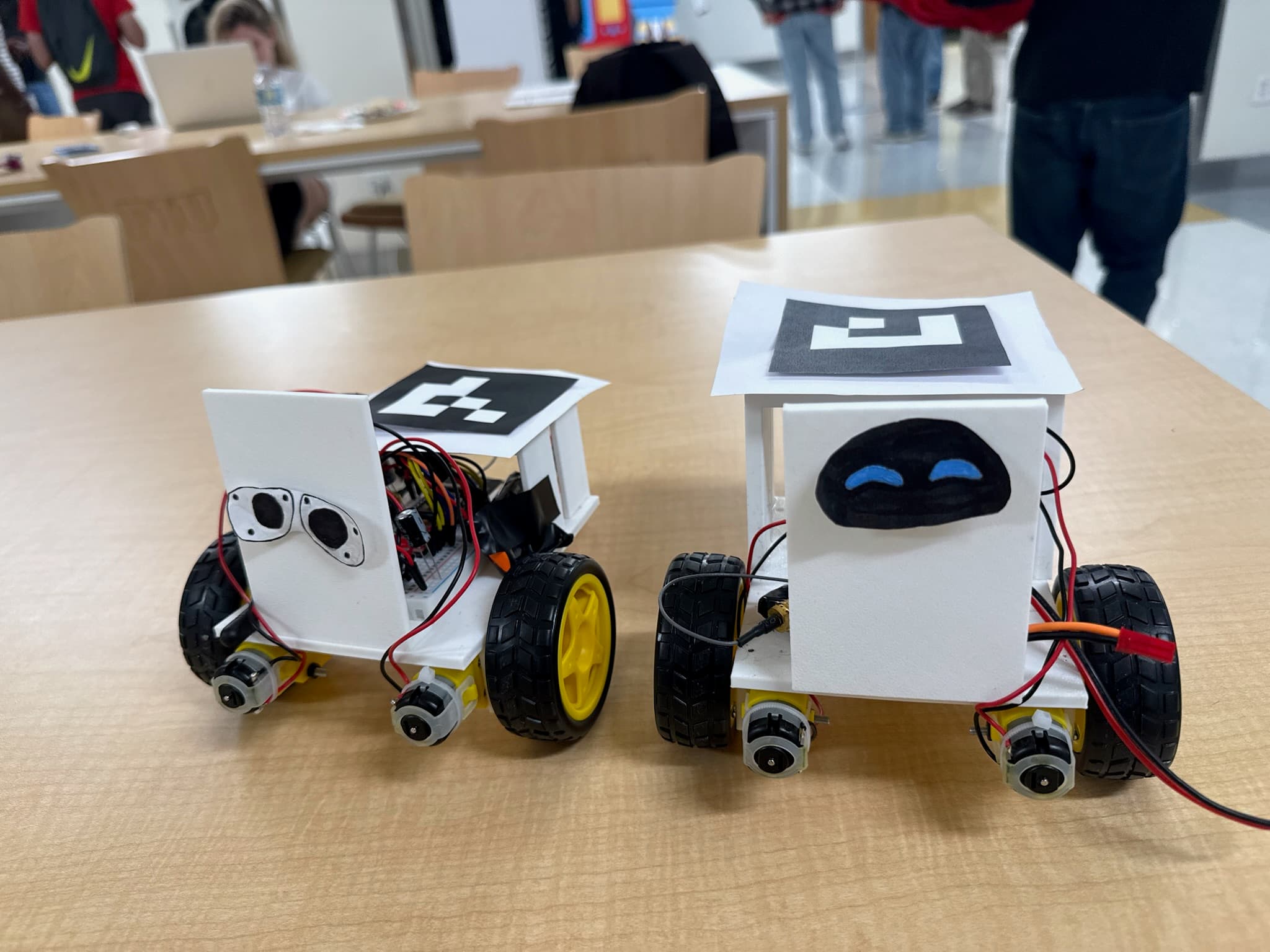
Two wheeled robots with hand-drawn faces, exposed electronics, and visual markers on top.
A little hardware, a lot of personality.
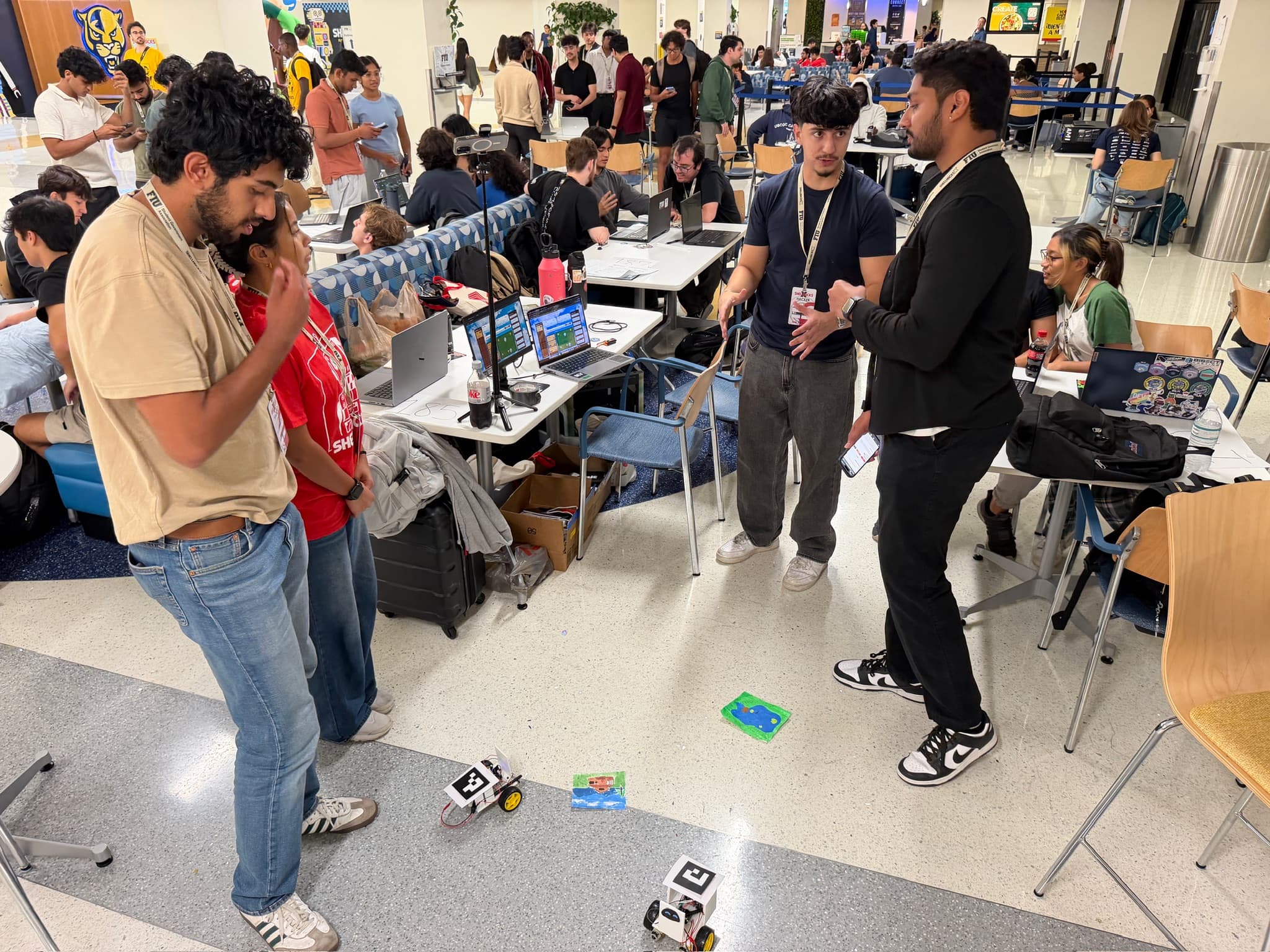
A robotics demonstration at ShellHacks, with two small robots on the floor and laptops running nearby.
The fleet in action / ShellHacks
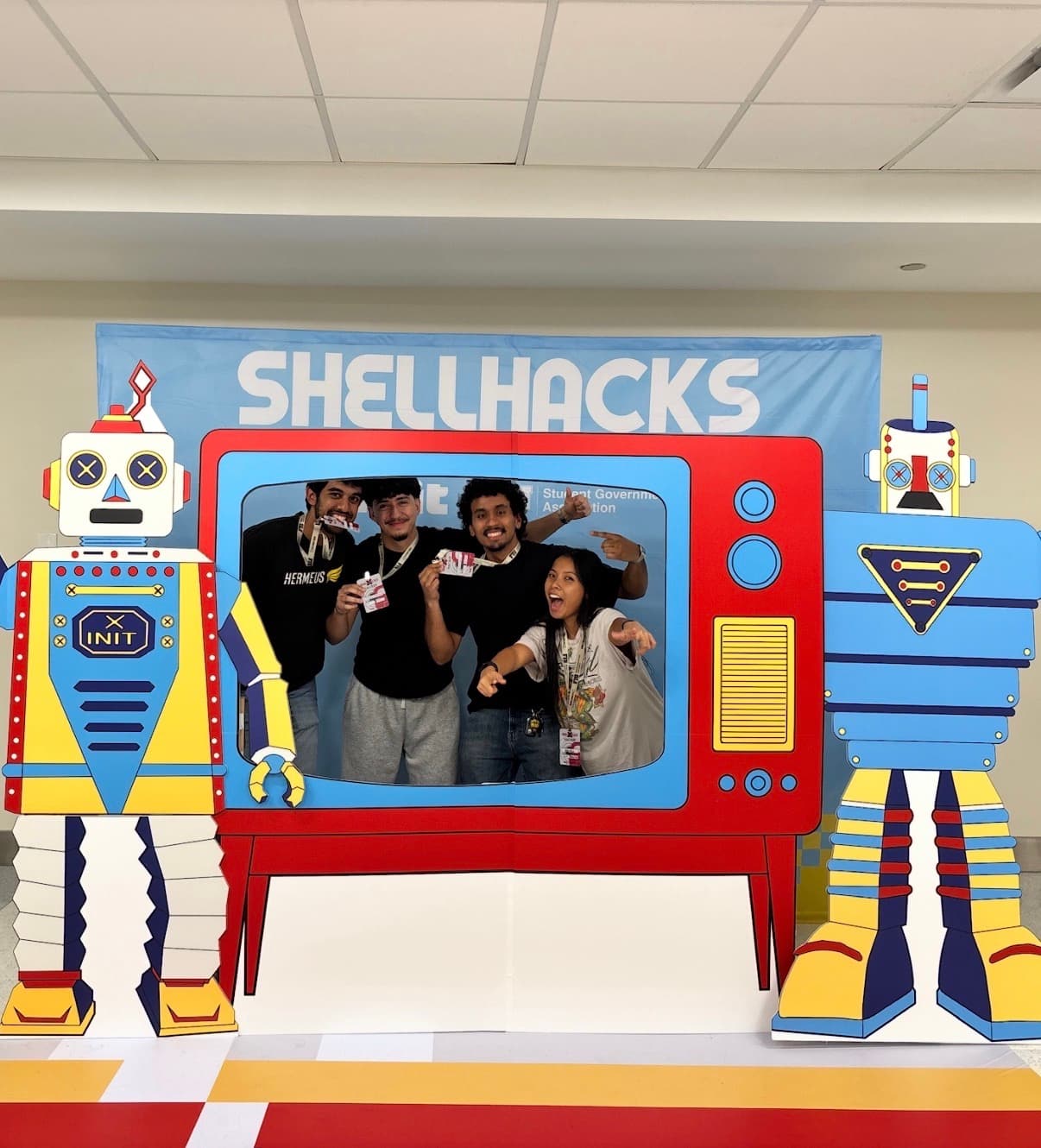
Four participants posing inside a colorful television frame beside robot cutouts at ShellHacks.
A moment with the crew / ShellHacks
See how the fleet fits together
Fleet architectureConcept sketch
From perception to physical movementA conceptual view of an overhead camera feeding centralized planning, which coordinates robots through Bluetooth. One robot is named WALL-Y.OVERHEAD CAMERACENTRALIZED PLANNINGBLUETOOTHROBOTWALL-YROBOT
Perceive. Plan. Coordinate. Move.
Meet WALL-Y

One of our robots was named WALL-Y. Getting the fleet running took more than code: motor noise was disconnecting the ESP32s. Investigating power behavior, adding suppression capacitors, and improving power handling helped us get reliable operation.

AI productivity / Full stack

LockedIn

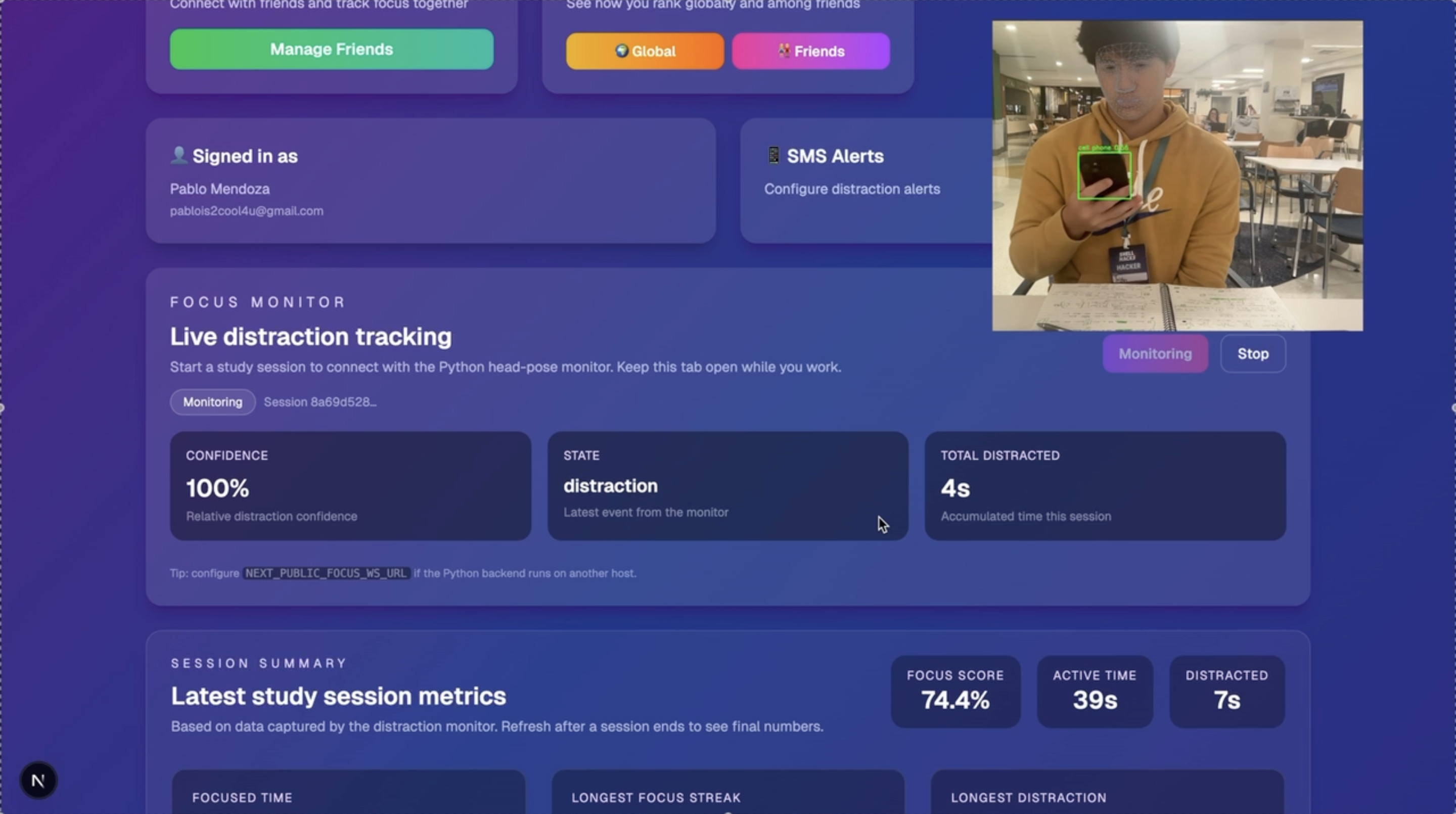
A focus platform that uses computer vision to recognize distractions during work sessions, then turns that activity into useful session insights and social leaderboards.

LockedIn dashboard showing live phone-distraction detection, focus metrics, and a camera preview.
Live distraction tracking / Open image for a closer look ↗
  • Built a Python inference pipeline and real-time WebSocket updates.
  • Designed the Next.js dashboard, authentication, and analytics experience.
  • Next.js
  • FastAPI
  • YOLOv8
  • MediaPipe
  • Prisma
  • NextAuth

Mobile / Team project

StudySpot

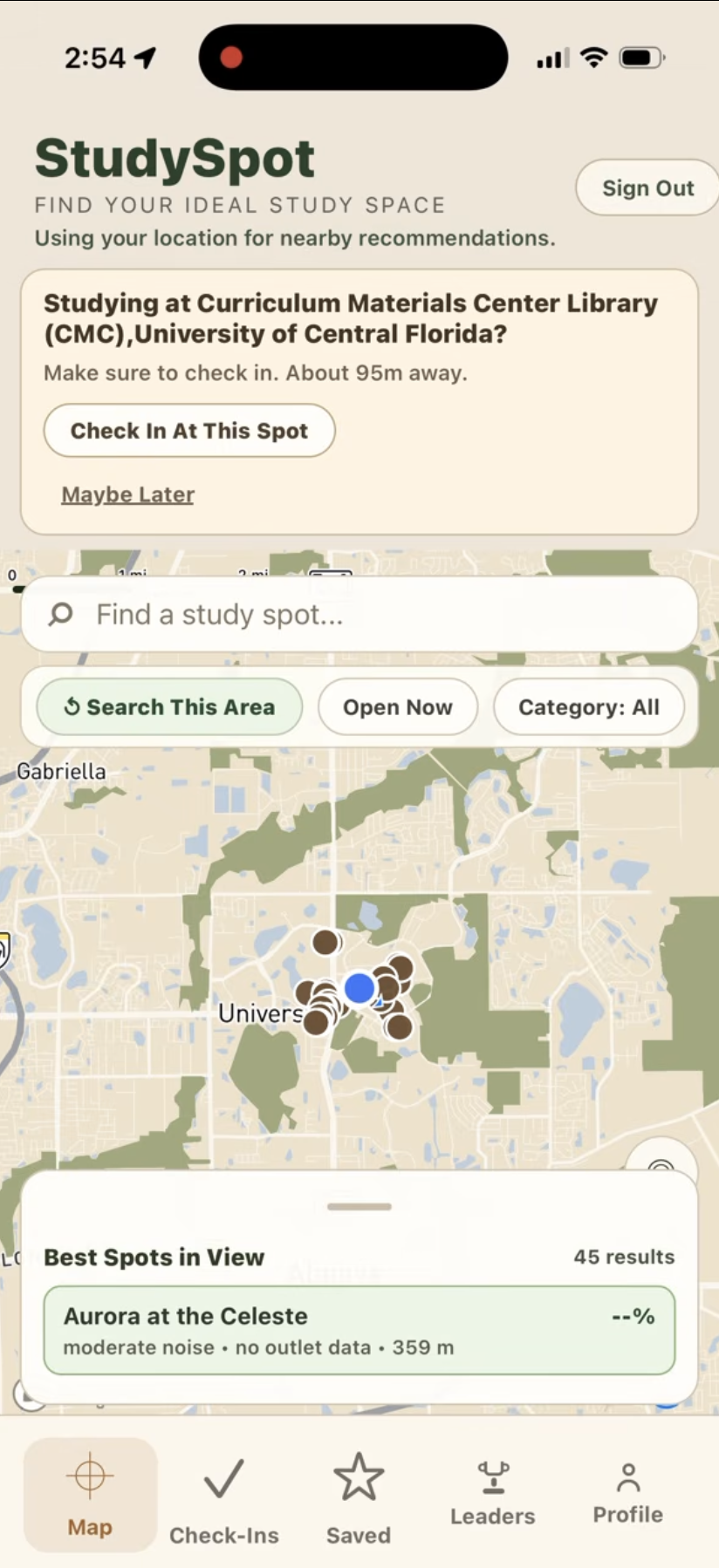
A study-location app with interactive maps, location-aware check-ins, and live availability scoring, built and tested with a four-person team.

StudySpot mobile app showing nearby study locations on a map, search filters, and a check-in prompt.
Finding a nearby spot / App view ↗
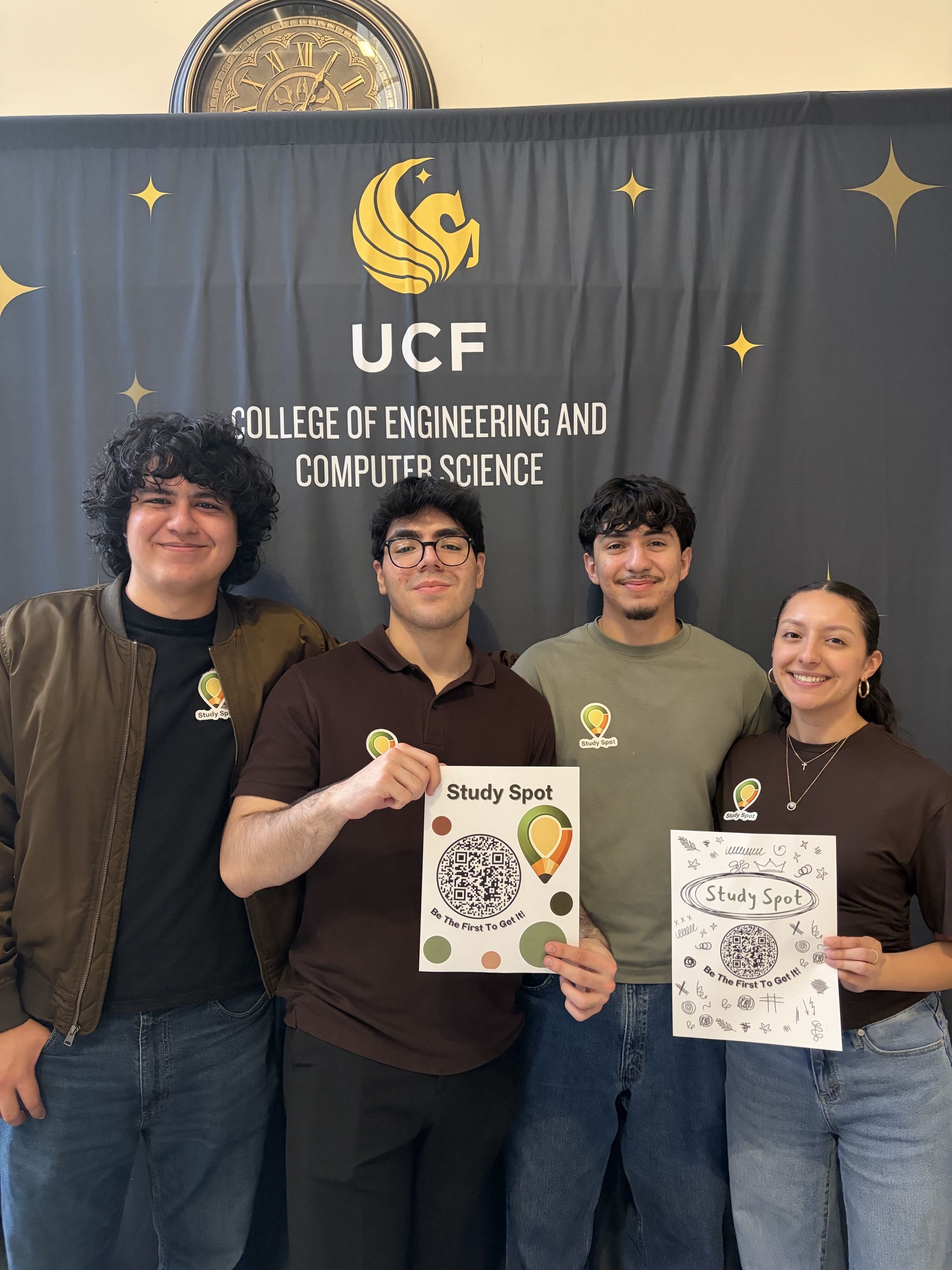
The four-person StudySpot team holding project posters in front of a UCF College of Engineering and Computer Science backdrop.
The team behind StudySpot ↗
  • Led the team through three months of product development.
  • Expanded location coverage with deduplicated Google Places searches.
  • Distributed internal builds through Apple TestFlight for feedback.
  • React Native
  • FastAPI
  • PostgreSQL
  • Google Places API